
As the date of our departure is approaching at a dizzying pace; amidst all the preparations, came the realization that we have a blog. An empty blog to be precise. We have great plans for our little project, but as you can imagine, planning for an epic journey while imprisoned in our humdrum existence is not an easy task. Both logistically and psychologically. Alas, what can one do, but to try to futilely overcome. And overcome I shall; by delivering a little taste of whatever the Grand Tour Project might become.
What’s a Grand Tour anyway?
A couple of centuries ago, when European culture, art, and science were a lot more localized, aristocrats came up with something that essentially evolved into the gap year of today. The trip was exceedingly popular with the elite from the 17th until the 19th century and was meant to educate and culture aristocratic youth, by sending them on a vast voyage to visit the main cultural centers of Europe; which went as well as you might imagine.
Now, one might think that during past few hundred years youths have steadily devolved into the debaucherous gremlins they are today, but as I see it, that cannot be further from the truth. I know, I was a debaucherous gremlin when I was in my late teens, early twenties and I’ve heard a few stories, seen a few photographs of my folks that would suggest that they were the same as well; and since I’ve began researching the Grand Tour it is evident that delinquency is not the symptom of the times, but of juvenescence. And honestly, I think that misbehaving and enjoying excess is probably one of the greatest teachers one can ask for.
There are many fascinating and probably even more exceptionally dull published accounts of Grand Tours of the time – feel free to research them yourself (Byron’s letters are particularly saucy). We are not here to form opinions about or – god forbid – judge youngsters who have died of old age hundreds of years ago, but to figure out what a Grand Tour is. We know, that there were some traditional routes the travelers took.
From the port cities of the North, there were several routes to go on, but in general, the terminus of Grand Tours after dicking around in France, Switzerland, and Italy was Venice, party central of the age.
Typically – for the British traveler – the itinerary would start in Dover, the gateway to the continent. From Dover there were a number of possible landing sites in Belgium and France. Arriving on the continent, the traveler and their companion(s) would hire locals to help them navigate the rest of the trip. This would be the point where maps were purchased, detailed plans were made and transportation was arranged. From the port cities of the North, there were several routes to go on, but in general, the terminus of Grand Tours after dicking around in France, Switzerland, and Italy was Venice, party central of the time.
If you visualize a map of Europe and draw a line from Le Havre to Venice, you might immediately spot a massive (pun intended) obstacle. The Alps.
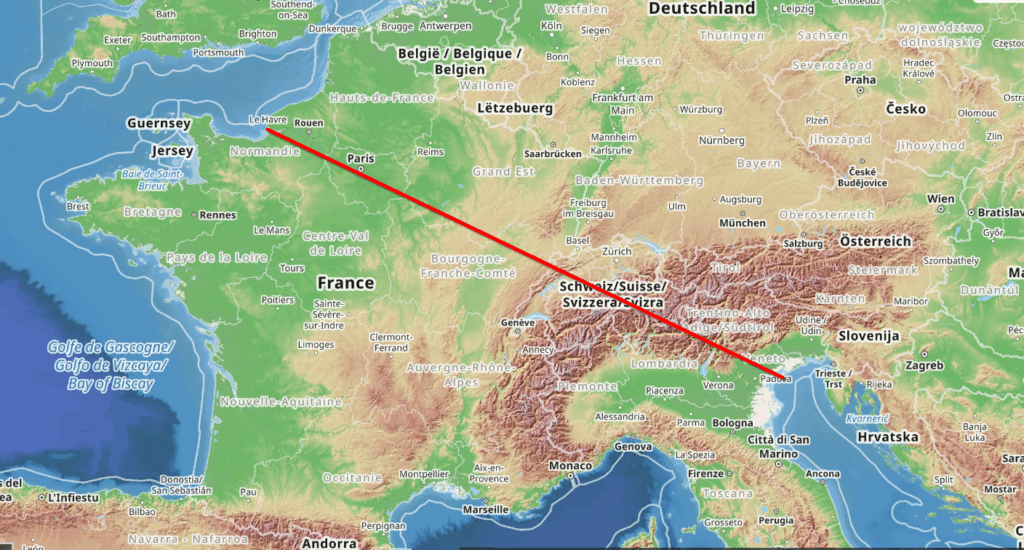
Although I’m sure that the rest of the trip was incredibly trying to the participants as well, but there is no question that the most harrowing part of a Grand Tour was the Alpine crossing. Nowadays one can comfortably traverse the jagged peaks by air, rail, or road, but back in the day the crossing was usually completed on foot, or if lucky, on a beast’s back. This includes the sedans carried by locals used only by the most wealthy.
The reason for the Alpine crossing becoming a major feature of every Grand Tour was that the cultural centers of Europe are distributed on both sides of the Alps — and on occasion, within them.
In the next centuries thanks to wars, the ever growing intra-European trade and in some cases tourism, new routes through the Alps emerged. I implore you, dear reader to open up an atlas and browse the road network of the Alps. It makes for a truly fascinating few days.
Of course, we will eventually visit some or all of the classical destinations on flatter terrain, but since this is first and foremost a blog about drivers’ holidays, I’d like to leave it at that for now.
Crossing the alps on foot is not ideal
The fact that crossing the Alps is a painful, but rewarding enterprise persisted until the mid to late 19th century when the first rail lines were built. The construction of the first railway routes through the Alps between 1848 and 1882 marked a significant technological and political milestone in European history. This period saw the development of major railway tunnels, including the Semmering, Mont-Cenis, and Gotthard tunnels, which were pivotal in connecting various regions and enhancing trade and travel across the continent.
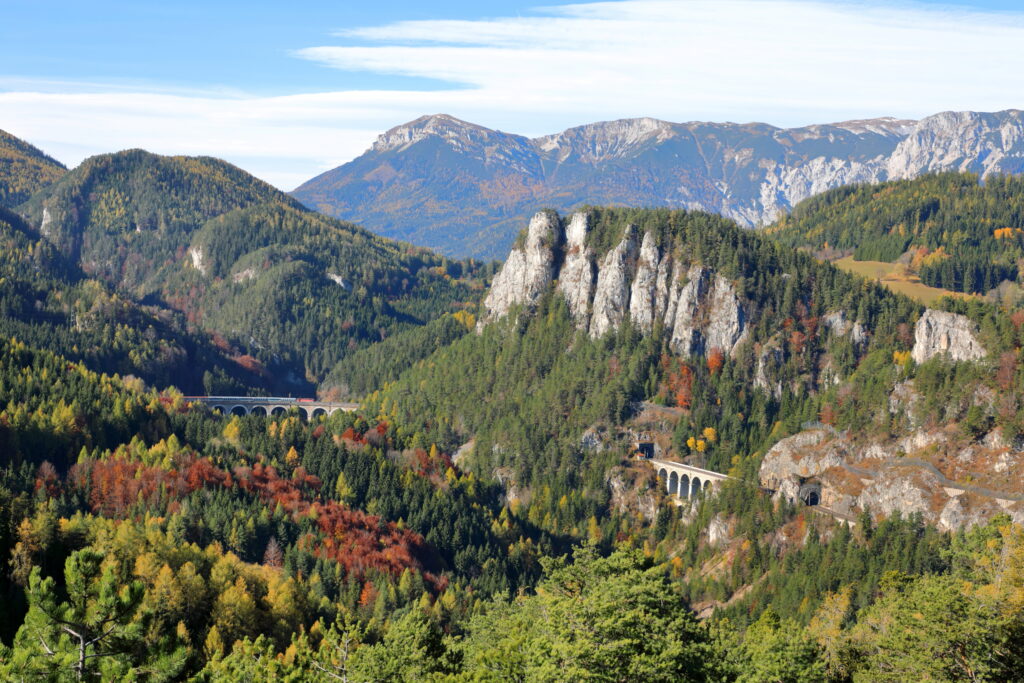
By C.Stadler/Bwag – Own work, CC BY-SA 4.0, https://commons.wikimedia.org/w/index.php?curid=112220918
The profound obsession of politicians, engineers, and business men to tame the Alps brought on a transformative period in the region, which was fitting for the time of limitless possibilities at the height of the industrial revolution. It was no longer a fantasy to travel from Vienna to Trieste in comfort, safety and at pace.
Due to the new railway connections, underdeveloped regions went through significant transformation as industry and business arrived. One notable and sometimes overlooked industry was tourism. With an easy and cost effective way to travel to previously hard to reach areas, the number of visitors exploded and to this day, the number of visitors is still steadily climbing.
Enter the motor-car
It’s difficult to pinpoint when the transition was made from the horseless carriage to the motor-car, so I’ll just pick a nice round number as year zero for modern motoring: 1900, the fourth year of what Americans like to call the brass era.
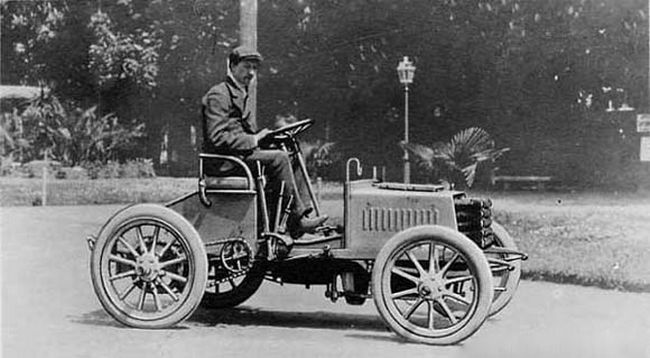
By Unknown author – old image, CC0, https://commons.wikimedia.org/w/index.php?curid=30741194
Another reason I chose 1900 as year zero is that the Gordon Bennett Cup ran from 1900 to 1905, ushering in a new age of innovation, national rivalry and most importantly motorsport. This racing series was responsible for a lot of features of motorsport we take granted today.
The Gordon Bennett Cup was a competition between nations and/or national automobile clubs, and not individuals or privateer teams. All the cars that took part, had to be fully manufactured in the country they represented. As well as:
Every automobile had to sport the national colour, which thereafter was traditionally
maintained as blue for France, white for Germany, green for the British Isles, black for Italy, and red for the United States (this colour later became Italy’s).
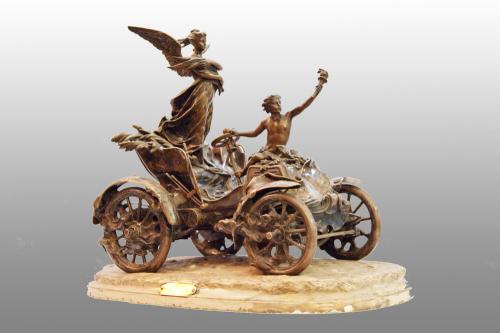
https://ehne.fr/en/encyclopedia/themes/material-civilization/material-modernityies-europe-in-expansion/motoring-and-national-victories
Other than inseparably attaching the color green to British Racing and being the progenitor of modern Grand Prix racing, in the five short years the cup ran, it was a catalyst for progress. The series drew countless automotive pioneers to compete and develop new cars such as Charles Rolls, Emil Jellinek, and Vincenzo Lancia.
From here on out, cars got faster, safer, more comfortable and practical. This was the time where the motor-car established itself as an icon. In the following decades, there was something for everyone.
A new type of expedition
Perhaps there is a primordial need in humans to push not only the limits of our bodies, but our technology toys. Predictably, this happened to the automobile as well, of course you should climb mountains with your Devil Wagon!
Expeditions undertaken using motor vehicles is a rabbit whole that I shall dive into sometime when the weather is cold and we are forced off the mountains by nature’s wrath. So for the time being I’ll focus on the context of Grand Touring.
Sometime earlier this year I was introduced to a kindred soul who lived many moons ago, called Charles L. Freeston. Unfortunately until now I hadn’t had the good fortune to find out too much about him, other than that he was an early and long-time advocate of the motor-car.
From what I could gather, he wrote several books about mountain driving, one of which I happen to own (a horrible public domain cash-grab edition that is basically a scanned library book) titled The High-Roads of the Alps from 1910. In which he wrote:
If there is one place on earth where the tireless qualities of the motor-car may justify themselves, it is on the long-drawn but glorious ascent of an Alpine Pass.
and
The crossing of an Alpine pass is, beyond all fear of contradiction, the most sporting, and the most exhilarating purpose to which an automobilist can devote his car.
A 125 years after he wrote that, I couldn’t agree more. Indeed technology has progressed to the point where driving an Alpine Pass could be a part of someone’s daily commute (the lucky bastard), but there is still something special about arriving at the top of a pass and equally admiring the landscape and the vehicle that made it possible to see it.
Freeston also wrote long passages about the advantages of the car over horse-drawn carriages and walking which are quite interesting to read in a time when cars are everywhere, but are also an endangered species. Honestly, I cannot recommend this book enough to anyone who is interested in driving or the Alps as it gives the unique perspective of an enthusiastic early adopter while also providing surprisingly relevant information.
I’m sorry, but before I move on, I must go on another tangent. I have a hard back copy of The High-Roads of the Alps from a probably defunct public domain cash-grab operation that is basically a scanned library book re-published. Please, if anyone has a genuine copy, do reach out to me. I’m also interested in the author himself, since I could not find too much information about him. It seems that all his books were published before the Great War, so I suspect he might have gone the way of the soldier. I’d be grateful if anyone could provide a little more insight into this man’s life.
With the book review out of the way, I can say that my previous adventures in the Alps were mostly governed by the sporting challenge of driving in such circumstances. No matter how modern or boring a car is, one can always feel that the terrain is testing the machine somewhat, and in my personal opinion that is a good thing. It brings back the more primal aspects of driving. There is no amount of sound deadening, electronics, fancy suspension setups and engine control systems that can enable the driver to ignore his surroundings.
Yes, the equipment changes over time, but to elegantly take a steep hairpin turn still needs some finesse. We might not have to worry about engine temperatures or carburetor settings at altitude as much as in the old days, but your brakes can and will overheat if you don’t know how to descend properly. You will lose power above 1800 meters of elevation (forced induction does help a lot). Although, with the necessary preparation any journey in virtually any car is doable these days.
Touring in style
Grand Tourers were and still are, in my humble opinion, the perfect motor-vehicles; blending elegance, performance, and practicality. This magnificent class of cars emerged from touring cars and streamlined sports cars of the 30s. The Berlinetta was a small, sleek sports car that was developed in the 30s, when the Italians (who else) had the brilliant idea to create a practical, comfortable and rapid class of car, the Gran Turismo or the Grand Tourer as it is known today.
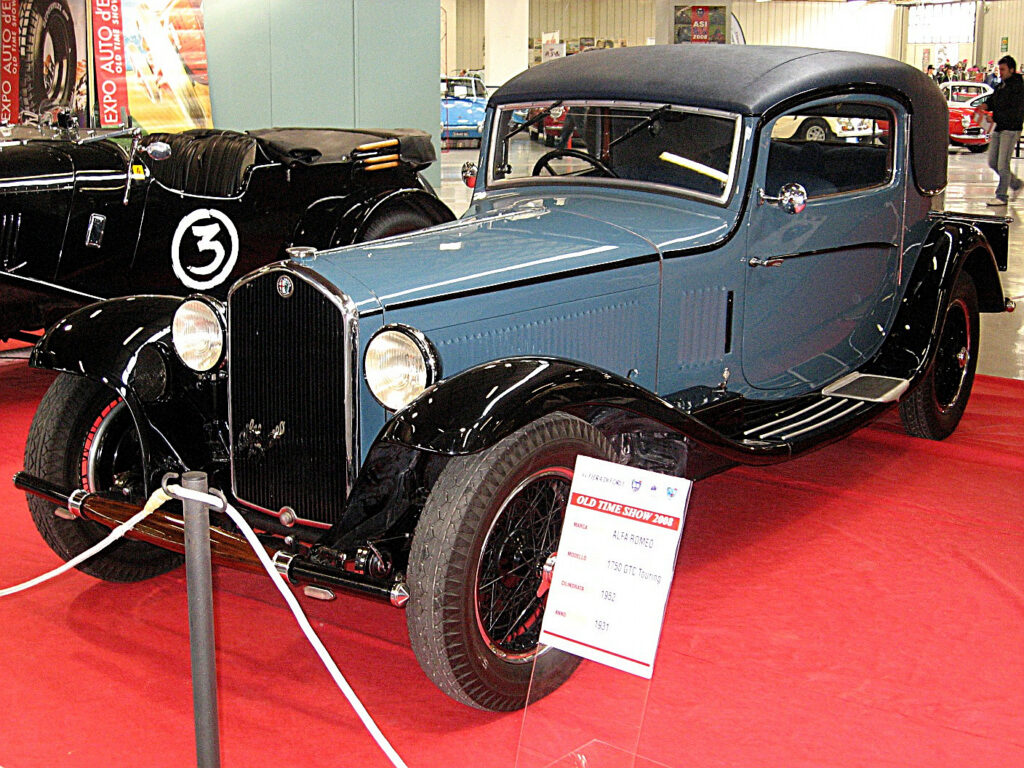
Honestly, Sam Dawson of Classic Car has already written the perfect definition of what a GT car would be, so I think that quoting him on this is the best course of action.
“the ideal is of a car with the ability to cross a continent at speed and in comfort yet provide driving thrills when demanded”
- The engines “should be able to cope with cruising comfortably at the upper limits on all continental roads without drawbacks or loss of usable power”.
- “Ideally, the GT car should have been devised by its progenitors as a Grand Tourer, with all associated considerations in mind.”
- “It should be able to transport at least two comfortably with their luggage and have room to spare — probably in the form of a two plus two seating arrangement.”
- The design, both “inside and out, should be geared toward complete control by the driver”.
- Its “chassis and suspension provide suitable handling and roadholding on all routes” during travels.
Book hunting request number 2: the quote above is from GT: the world’s best GT cars 1953–1973 (2007, Veloce) if you have a copy lying around somewhere that you are willing to part with do let us know.
In my view the golden age of GT cars were from the mid 40s to the late 90s. During the jetset era, when regional flights and private jets were still out of reach for even the rich and famous, getting around Europe was a bit of a hassle. For this reason luxury brands began manufacturing cars that suited the needs of the upper echelon of drivers. It was this golden age that gifted us with the likes of the Aston Martin DB4 through DB6 and DBS, Mercedes 300SL, Ferrari 250GT, Jaguar E-Type, XJS and XJC12, Jensen Interceptor/FF, Maserati Ghibli, Citroen SM, BMW E9 and the 6 series, Facel Vega HK500, Porsche 911 and so on…
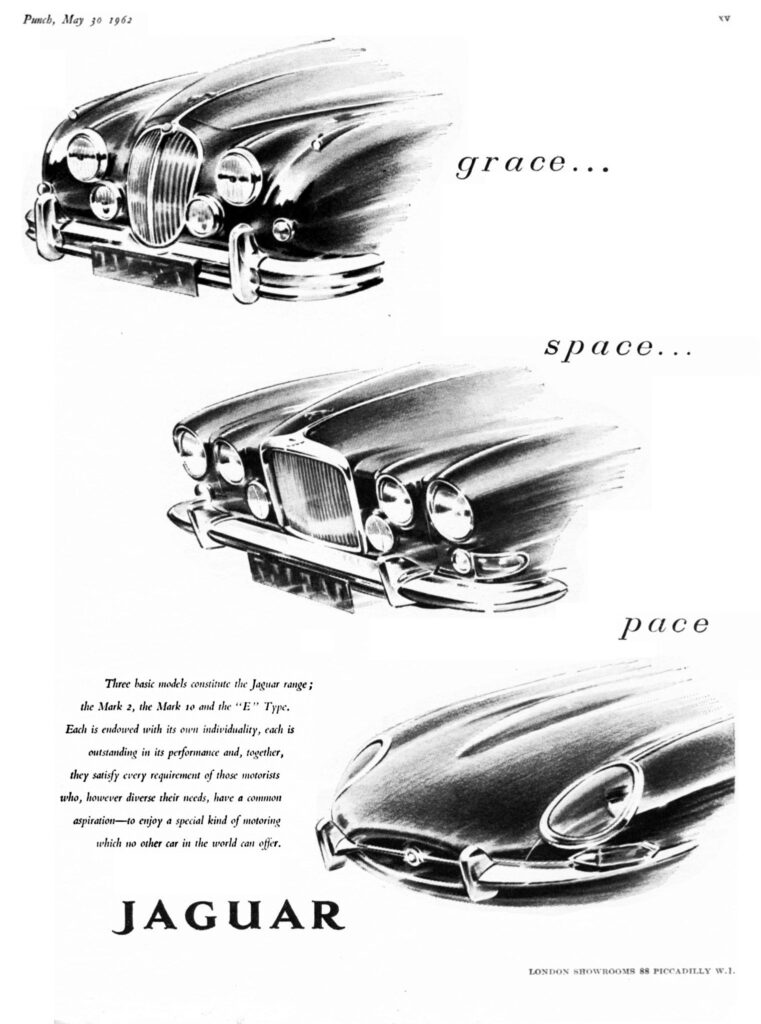
Jaguar’s early slogan grace, space and pace perfectly describes what is required from this class of car.
Ever since I was a child capable of watching James Bond, I have dreamed of owning a proper GT car and driving it in the Alps. The perfect car on perfect roads surrounded by perfect landscape. Now that I’m an adult, this is still my dream. I am yet to be able to afford buying and maintaining a GT car, but thankfully, I have the next best thing and a whole library of road-books that I want to complete.
Our GT methodology and equipment
Harking back to the original purpose of this post, developing our definition, based on the the above we can safely conclude that a journey with the Grand Tour Project must include the following:
- An itinerary made up of several stops along a challenging route
- Which is to be completed in a fast, comfortable and elegant vehicle
- A promise of experiencing and learning about culture and art
- Debauchery
Given that we have day jobs and cannot afford to be on the road all the time and stay at fancy hotels, regardless of how much we would prefer that, we had to come up with a vacation plan that combines the parameters above.
For the tours itself, we will initially focus on the Alps as stated before. For navigation we will use waypoints, rally style. For each trip a roadbook is to be compiled. Since I’m not a fan of tolls and highways, we will avoid them at all costs. Probably, in the future I will go on a rant about how highways are utterly boring and terrible, but time is precious now.
During route planning special care is taken to select the very best driving roads on any section. Accommodation is reserved ahead of time for one to two days at any station of the trip. Each station is researched well ahead of departure and certain sites of interest are selected to be visited in the area.
For each section we will be recording the transit time, fuel consumption and average speed. The data is essential for tracking our progress and environmental footprint. In this day and age, it would be selfish not to offset our emissions. I have done this ahead of time by instead of commuting by car for 6 months I only took electric trains running on nuclear power (and planting about 100 trees in my youth as a landscaper). In the future we will make more careful calculations and come up with ways to truly offset our emissions.
I wish I could say that I have a nice GT or sports car to complete the trip, but I don’t. This is a good thing from the perspective that I can prove that Grand Touring can be done with any car.
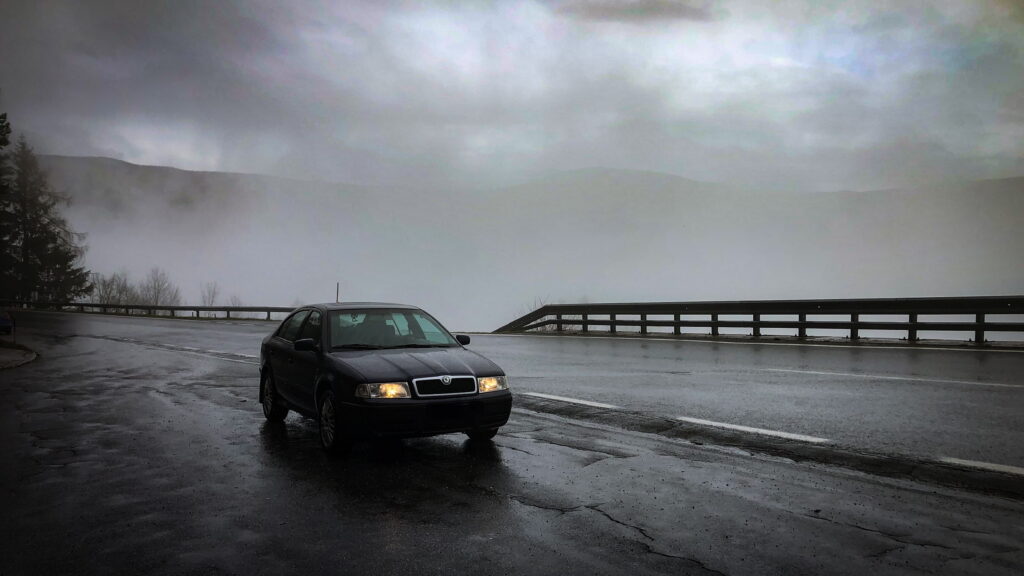
Our ride is a high mileage hero 2001 Skoda Octavia with the venerable 1.8T engine and about 430 000 km on the odo named Svejk after Jaroslav Hasek’s series. If we look at our criteria set in the previous section, it doesn’t tick all the boxes and he’s a bit ropey, but he does have power and space.
The Grand Recce Begins
It is no secret that we would like to build a small community of like minded travelers. It is our goal to develop a system for drivers to compete in a friendly and safe manner without having to organize a whole real rally.
This year, we are undertaking a Grand Recce between Maribor and Krumpendorf, driving through the Julian Alps, Dolomites, Tyrol and Karnten. The route has been planned to include the most scenic roads.
Soon, a whitepaper and the road-book containing all information will be published. We really hope that at least one “team” will drive the exact route, because we did our best to make it the most beautiful and memorable journey we could come up with.
Leave a Reply